

For the people standing beside someone they love
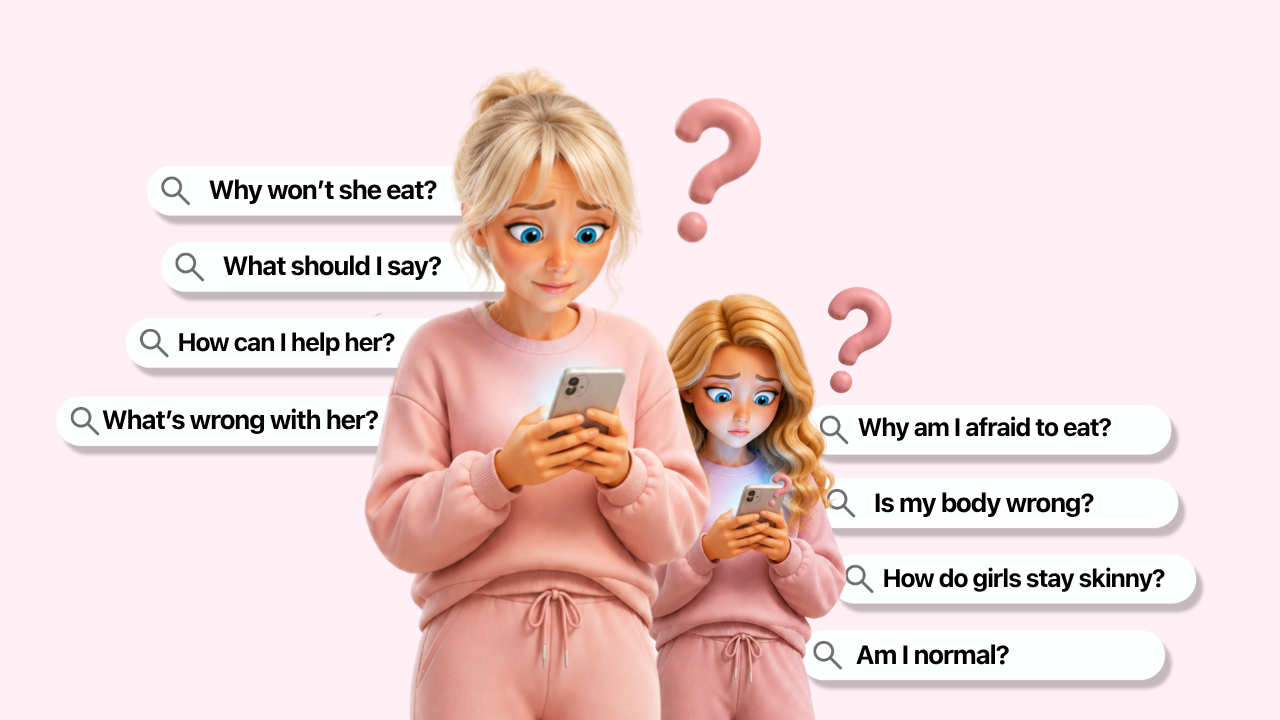
Watching someone you care about struggle can leave you feeling frightened, helpless and unsure what to do next. You might be searching for the right words, questioning every conversation, or wondering whether you're helping or making things harder.
This space was created for those moments.
Whether you're a parent, carer, partner, sibling, grandparent, friend or teacher, you'll find clear, compassionate explanations designed to help you understand what may be happening beneath the behaviour, communicate with greater confidence, and feel a little less alone. Because one of the most important things to remember is this:
The eating disorder is something happening to them. It is not who they are.
You haven't lost them
It may feel as though food, fear and rules have slowly taken over the person you know. Meals that once felt ordinary may now feel loaded. Conversations can become tense. She may seem distant, frightened, angry or unlike herself.
You may find yourself wondering:
- "Why can't she see how unwell she is?"
- "Why does eating feel so frightening?"
- "Am I saying the wrong thing?"
- "How do I help without turning everything into a battle?"
First, take a breath. The behaviour you can see is only the outside of what she may be experiencing.
Eating disorders are not simply about food, appearance or willpower. They can become tangled up with fear, safety, identity, control, anxiety and a brain that has learnt to treat nourishment or change as a threat.
The more you understand what may be happening underneath, the less alone and powerless you have to feel.
What to say, and what to avoid
- "You look healthy."
- "You need to eat more."
- "I wish I had your willpower."
- "You're too skinny."
- "I can see this feels really hard."
- "We're going to figure this out together."
The voice isn't your daughter.
The eating disorder is something happening to her, not who she is.
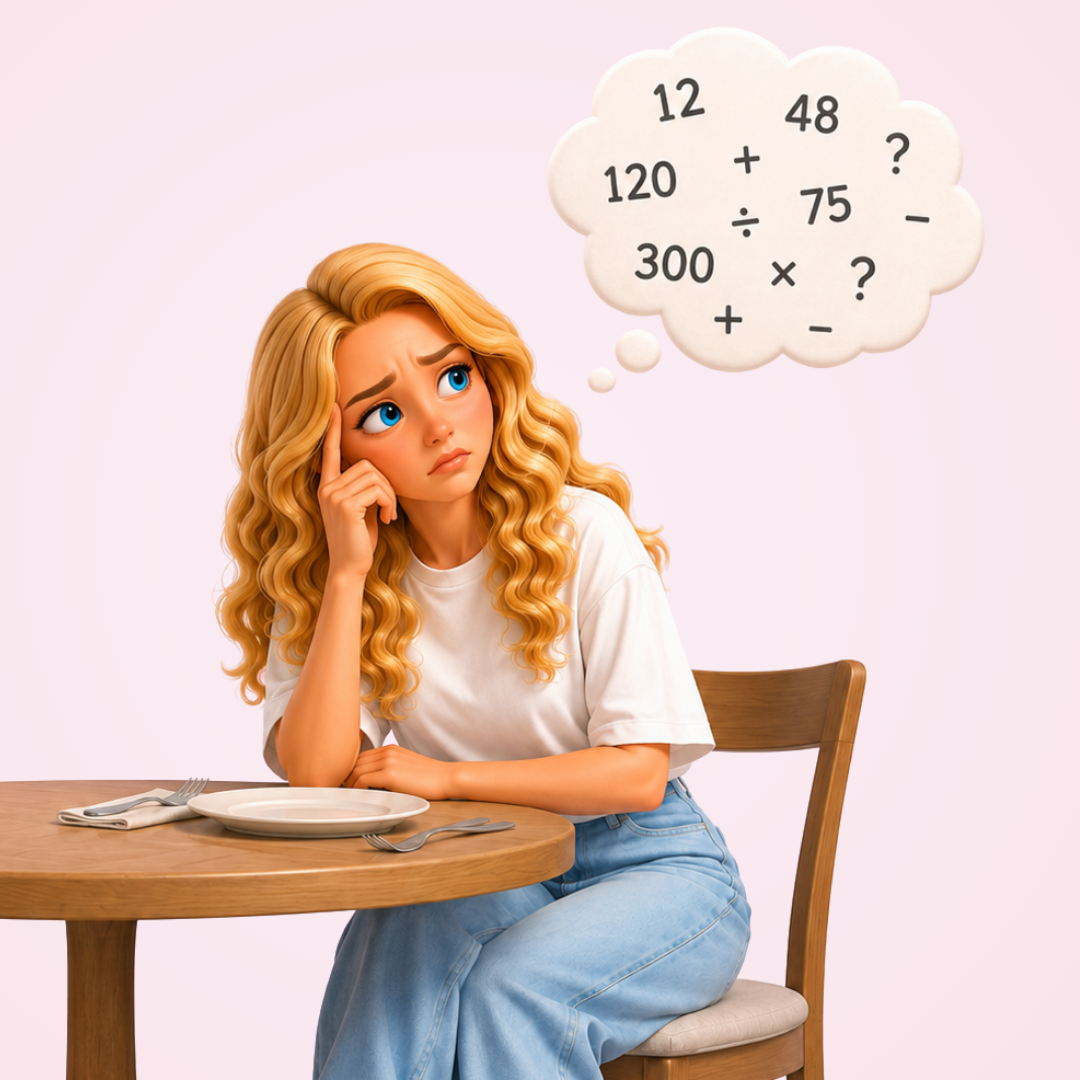
You don't have to work this out alone.
Understanding what's happening beneath the behaviour is the first step towards supporting her through it.
Let's answer the questions that feel hardest to ask
It can feel as though someone you love has completely changed.
The daughter, partner, friend or sibling you knew may seem more anxious, withdrawn, irritable or distant, and it can leave you wondering where they have gone.
The truth is, eating disorders can affect the brain just as much as the body. Understanding why those changes happen doesn't make them any less difficult—but it can make them feel a little less confusing.
From the outside, it can seem like the answer should be simple.
If they're underweight...
If they're exhausted...
If they know they're unwell...
...why can't they just eat?
Because eating disorders aren't a lack of knowledge or willpower. They can create an intense fear response around food, making something essential for survival feel frightening, overwhelming or even unsafe.
The more you understand that fear, the easier it becomes to see the person behind the behaviour.
When someone you love is struggling, it's natural to worry about saying the wrong thing.
Should you encourage them?
Challenge them?
Leave it alone?
Start the conversation?
There isn't one perfect sentence that changes everything.
But there are ways of communicating that can help someone feel safer, more understood and less alone—especially during the moments that matter most.
Recovery is about far more than helping someone eat.
It's about helping them slowly rebuild trust—in food, in their body, in other people and often in themselves.
Some days that might look like sitting quietly beside them.
Some days it might mean celebrating a tiny step that nobody else would notice.
You don't need to understand everything today.
You only need to understand enough to take the next conversation, the next meal or the next difficult moment with a little more confidence than the last.
Understanding doesn't make eating disorders disappear overnight. But it can change how someone feels when they're standing beside them. Because when people feel understood, they usually feel a little less alone.